
Solar panels for a private home offer a practical way to reduce reliance on external energy suppliers and cut monthly electricity costs. A residential solar power system converts sunlight into usable electricity that can be consumed immediately, stored in batteries, or—under the right conditions—fed back into the grid.
To ensure the system operates reliably and pays for itself, it is crucial to select the right capacity, consider roof and wiring specifics, and plan for various consumption scenarios—such as daytime loads, seasonal fluctuations, and backup power for outages. Proper installation and configuration Solar Service and Repair help prevent efficiency losses and extend the equipment’s lifespan.
Installation: the process and key considerations
The process begins by assessing average electricity consumption and the load profile (identifying which appliances are used and when). Next, the system type is selected: grid-tied (no batteries), hybrid (with batteries), or off-grid (completely independent). This stage also involves determining the heat pump installation site and evaluating factors such as shading from trees or buildings and the condition of the roof.
- Consumption audit: analysis of utility bills and peak loads.
- Roof assessment: orientation, pitch, load-bearing capacity, and shading.
- Component selection: panels, inverter, mounting hardware, protective equipment, and batteries (if required).
Panel mounting and inverter connection
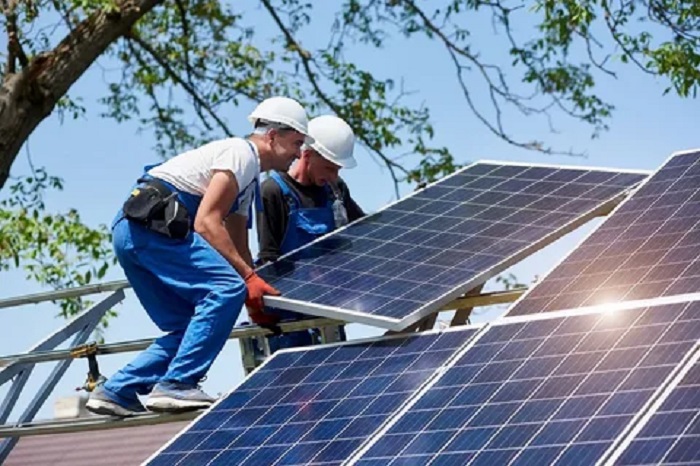
The panels are mounted on a secure structure, taking into account wind loads and the need to maintain roof watertightness. Next, cabling is installed along with protective switchgear and the inverter, which converts the direct current (DC) generated by the panels into the alternating current (AC) used by the household electrical system.
The final stage involves checking connections, testing performance under load, and configuring monitoring systems to track energy output and efficiency.
Safety, documentation, and maintenance
It is important to plan for grounding, lightning protection, and automatic shut-off systems in advance to ensure the safety of both people and equipment. If grid-tied operation is planned, approvals and the installation of bi-directional metering may be required. Regular inspections of mounting hardware and electrical connections help maintain efficiency and prevent operational issues.
When selecting a contractor san diego heating and cooling, it is useful to evaluate their experience with comprehensive engineering tasks, such as electrical work, roofing, and the setup of automation and monitoring systems. In regions with hot climates and high cooling demands, turnkey solutions from specialized HVAC companies are highly sought after; proper integration of solar power generation with climate control systems yields significant cost savings and more consistent home comfort.
Home applications for solar panels: lighting, appliances, and heating
Solar panels installed on a private home convert sunlight into electricity that can be used for everyday needs—from indoor lighting to powering household appliances. Depending on the system’s capacity and the chosen configuration (with or without battery storage), solar power can either partially offset consumption or serve as the primary energy source.
In practice, solar panels help lower utility bills, increase energy independence, and provide a backup power supply during grid outages. To ensure the results meet your expectations, it is important to define exactly which needs you want to address with solar energy and select the appropriate equipment: an inverter, batteries (if needed), protective devices, and a monitoring system.
Key needs that can be met with solar energy
- Lighting: powering indoor and outdoor lights, including pathway lighting, facade fixtures, and lighting for utility areas. Lighting is one of the most convenient loads for a solar system, as it consumes relatively little energy.
- Appliances and electronics: refrigerator, router, computers, TV, chargers, washing machine (provided there is sufficient power), and kitchen appliances. Loads that can be shifted to daytime hours—when power is being generated—operate most efficiently.
- Building systems: circulation pumps, boiler controls, ventilation systems, and well pumps (provided starting currents and the inverter are correctly matched). This enhances the home’s resilience, especially during power outages.
- Hot water and heating: electric water heaters, underfloor heating, electric boilers, and convectors can run on solar power but require significantly higher installed capacity and often a battery backup. The most rational approach is to cover only a portion of the heating load or to operate the system in conjunction with a heat pump and/or another heat source.
- Minimum level: lighting, communications, and basic outlets—focusing on reliability and autonomy.
- Comfort level: adding major appliances and building systems—focusing on cost savings and covering daytime consumption.
- Advanced level: contributing to water heating and partial space heating—focusing on accurate power calculations and seasonality.
In summary: residential solar panels primarily provide a reliable solution for lighting and powering everyday appliances; with proper design, they can also support building systems and provide backup power during outages. Solar generation is also viable for heating and hot water, though it requires a more powerful system and a realistic assessment of seasonal factors. Therefore, the best results are achieved through a combination of solar panels, smart load management, and an appropriate configuration (with or without battery storage).