
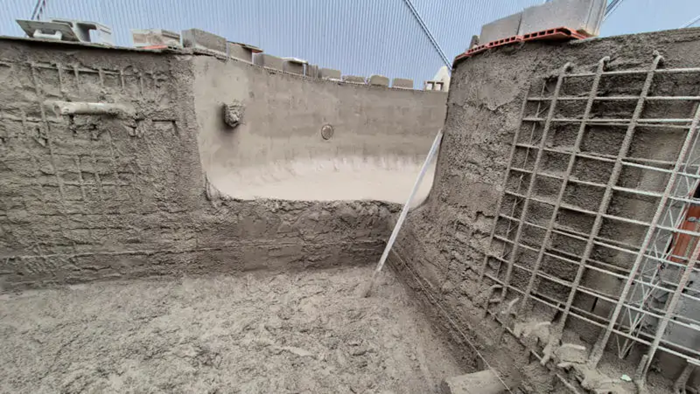
A shotcrete pool is chosen when a durable, monolithic pool with a complex shape is needed, designed for long-term use and heavy loads. Shotcrete technology allows concrete to be applied under pressure, forming a dense layer with high adhesion to the base.
This approach is suitable for private properties, spa areas, and commercial properties: overflow and skimmer systems can be designed with aqualand-pools.com/, and steps, loungers, whirlpools, and utility niches can be integrated without compromising geometry or reliability.
Advantages of a Shotcrete Pool
Shotcrete (shotcrete) creates a monolithic pool with a minimum number of cold joints. This improves resistance to soil deformation, temperature fluctuations, and prolonged exposure to water.
- Freedom of form: radii, curved sides, variable depth, and built-in elements are created without complex formwork.
- High layer density: with the correct formulation and application, porosity is reduced and the structure’s water resistance is increased.
- Speed of pool formation: with a prepared base, concrete application is quick, and the geometry is immediately established.
- Durability: monolithic reinforced concrete is resistant to cracking if design decisions and maintenance are followed.
- Ease of finishing: the surface can be prepared for mosaics, tiles, stone, or polymer coatings.
What is pool shotcrete: principle and composition of the mixture
In swimming pool construction, shotcrete is used both for creating a pool from scratch and for reinforcing and repairing structures. The key result of properly executed shotcrete is a watertight, crack-resistant, and durable base for subsequent waterproofing and finishing.
The principle of shotcrete and what the mixture consists of
The principle is based on feeding the components through the shotcrete equipment and compacting them with the energy of impact on the surface. The mixture particles are “driven” into the base, filling pores and unevenness, and the resulting layer acquires increased density compared to conventional installation.
The composition of the shotcrete mixture is selected according to the project, taking into account the required strength, water resistance, and operating conditions. A typical set of components includes:
- Cement (as the primary binder);
- Aggregates (sand, fine crushed stone/gravel, depending on size and technology);
- Water (to increase cement mobility and hydration);
- Additives (plasticizers, accelerators/retardants, anti-shrinkage agents, water-repellent agents – as calculated and compatible);
- Fiber (polypropylene or steel – to reduce cracking and improve impact resistance).
Application methods are divided into dry and wet methods: with dry methods, water is added to the nozzle, while with wet methods, the premix is applied. The choice of technology affects equipment requirements, water-cement ratio control, dust formation, and the quality of layer compaction.
Bottom line: shotcrete pool basin is a technologically advanced method for creating a dense and durable concrete pool shell using pressure spraying. Properly selected mixture composition and adherence to application technology create a monolithic, moisture- and load-resistant base upon which waterproofing and finishing can reliably operate.